Startup guide
How to start a spray-on bedliner business
Equipment starts around $25,000, the shop costs a few thousand more, and a standard bed sells for roughly $450 to $800. Here is how the numbers fit together and where the first customers come from.
Calculator
Bedliner business payback calculator
Key takeaways
- ArmorThane's applicator systems start at $25,000, which covers the proportioner, heated hose, gun, first set of chemical and training.
- Budget another $3,000-$8,000 for the shop side if you start from a bare building. High-pressure polyurea setups run closer to $50,000.
- Published 2026 price guides put a standard bed at roughly $450-$800, with long beds and custom color higher.
- A full-size bed takes about 5 gallons at 100 mils, and aliphatic (UV-stable) material adds 30-45% to material cost.
- In this guide's worked example, 3 beds a week at $575 recovers $30,000 in about 27 weeks, before rent, insurance and your own pay.
What it costs to start
A basic spray-on bedliner shop starts at about $25,000 for equipment and training, plus a few thousand dollars to set up the building. Choose high-pressure equipment and the equipment figure roughly doubles.
This site is sponsored by ArmorThane USA of Springfield, Missouri, which sells applicator startup packages, including the ones priced below (more about this site).
ArmorThane says its new applicator systems start at $25,000 and that the figure covers what you need to spray a first bed, not just the machine. Rhino Linings says its packages start at $12,000. Compare what each package includes before you compare the prices.
| Item | Cost | What it covers |
|---|---|---|
| ArmorThane applicator system | From $25,000 | Proportioner, heated hose and gun; first set of chemical; training and certification; respirator, suits, gloves and masking; consumables; lifetime tech support |
| Shop side, starting from a bare building | $3,000-$8,000 | Compressed air with a dryer, surface prep tools (DA sander, abrasives, degreaser), masking supplies, ventilation and warm drum storage |
| Other items outside the system price | Not published | Shop lighting and a vehicle that can haul drums |
| High-pressure polyurea setup instead | Closer to $50,000 | Faster cure and higher output; often needs an electrical upgrade that ArmorThane calls a four-figure line item |
| Business setup | Varies by city and state | Business entity, local license, general liability insurance, commercial auto if mobile, workers' comp once you hire |
The building does not need to be large. ArmorThane's equipment guide suggests roughly 24 by 30 feet, while its applicator page calls 20 by 20 the low end.
Financing comes from outside lenders. ArmorThane does not finance in-house and publishes no rates, and Rhino Linings also points buyers to third-party financing.
Going mobile adds cost
A mobile setup needs a generator and an enclosed trailer on top of the spray system. ArmorThane builds mobile coatings unit trailers from 16 to 36 feet and does not publish prices for them.
Low-pressure or high-pressure equipment
Most first-time shops choose between a low-pressure system at about $25,000 and a high-pressure polyurea system closer to $50,000. The cheaper rig is easier to learn. The expensive one is faster and opens more kinds of work.
Low-pressure (about $25,000)
- Runs at a few hundred psi with polyurethane material
- Working time in minutes and a slower cure; ArmorThane describes it as same-day, not same-hour
- Modest electrical needs
- A more forgiving spray window for a new applicator
- Limited throughput: ArmorThane warns a 14-beds-a-day plan will bottleneck
High-pressure (closer to $50,000)
- Impingement mixing at 2,000-3,000 psi with material heated to 150-160°F
- Gels in 2-10 seconds, and beds are walk-on in minutes
- Heavy power draw: a PMC PHX-40 pulls 142 amps on single-phase 230V
- Steeper learning curve, because a fast gel leaves little room for error
- Polyurea opens containment, flooring and roofing jobs
If you expect a few beds a week at first, low-pressure keeps the debt smaller. If your building already has three-phase power or you have commercial coating work lined up, high-pressure is easier to justify.
For a line-by-line look at gear and options, see the bedliner equipment cost guide.
What shops charge per bed
Published 2026 price guides put a standard spray-in bedliner between about $450 and $800, with long beds and custom colors higher. Your local market sets the real number, so check what nearby shops quote before you print a price list.
| Source | Standard bed | Long bed | Upgrades and color |
|---|---|---|---|
| ArmorThane cost guide (Sep 2026) | $525-$700 (most beds) | $575-$750 (8-ft) | Not listed |
| CostInsightHub (Apr 2026) | $450-$750 (short bed $380-$600) | $550-$900 | Premium upgrades add $150-$300 |
| ThePricer (Jul 2026) | $550-$800 (short bed $450-$650) | $600-$900 | Custom color $750-$1,200+ |
| Smokey Mountain Truck Outfitters (shop price list) | $549, $569 or $599 by bed size | Within the standard tiers | Premium $699-$749; color-match $848-$1,048 |
The guides disagree most on short beds: CostInsightHub starts at $380, while ThePricer starts at $450.
CostInsightHub says an install takes 2-5 hours, which caps how many beds one person can finish in a day.
Material per bed
ArmorThane's cost guide says a bed takes 4-8 gallons at 100 mils, or about 5 gallons for a full-size bed. Aliphatic material, which is UV-stable, adds 30-45% to the material cost. Price it as an upgrade.
Current per-gallon dealer pricing is hard to find in public, and the figures that do turn up are years old.
Build prices from your real cost
Get a written per-gallon quote from your supplier before you set retail prices. Multiply it by 5 gallons for a full-size bed, add tape, masking and abrasives, and see what margin is left at local prices.
A worked payback example
This is an example, not a forecast. It uses stated assumptions so you can swap in your own, and the calculator at the top of the page runs the same math.
- Volume: 3 beds a week.
- Price: $575 a bed, the low end of ArmorThane's long-bed range and inside most sources' standard-bed range.
- Material and consumables: $200 a bed. This is a placeholder assumption, not a market price. Replace it with your supplier's quote.
- Startup cost: $30,000, made up of the $25,000 system and $5,000 for the shop side.
- Left out: rent, utilities, insurance, marketing, loan payments, taxes and your own pay.
| Beds per week | Weekly revenue | Weekly margin after material | Weeks to recover $30,000 |
|---|---|---|---|
| 1 | $575 | $375 | 80 |
| 2 | $1,150 | $750 | 40 |
| 3 | $1,725 | $1,125 | About 27 |
| 5 | $2,875 | $1,875 | 16 |
At 3 beds a week, the example needs 80 beds, or about six months, to cover $30,000 in equipment and setup. Overhead comes out of the same margin, so the real date will land later.
ArmorThane's applicator page says payback on a $25,000 package usually lands in the first several dozen beds. On sales alone that holds up: at $500-$800 a bed, $25,000 is 31-50 beds of revenue. After material, the example above needs about 67 beds to cover the system by itself.
Step-by-step launch plan
Most of the launch work happens before the first paying bed.
- 1
Get trained
ArmorThane offers several intensive days of on-site training or a self-paced e-training course, and Rhino Linings offers three days on-site. Practice on scrap panels and your own truck before you spray a customer's.
- 2
Set up the equipment and shop
Install dry compressed air, ventilation, lighting and warm drum storage, and confirm your electrical service before delivery. ArmorThane says its dealers get equipment plus on-site training within 30 days.
- 3
Handle permits and insurance
Form a business entity, get a local license, and buy general liability coverage, plus commercial auto if you go mobile and workers' comp once you hire. Ask your city or county whether spraying at your address needs zoning or fire approval, because rules vary by city and state.
- 4
Set your prices
Start from what local shops charge, quote by bed length, and price aliphatic and color jobs as upgrades. Know your material cost per bed before you give the first quote.
- 5
Call car dealerships
New and used dealers can add a liner to a truck at the point of sale. Bring a sprayed sample panel and a dealer price sheet.
- 6
Reach fleets and off-road shops
Contractors, utilities and delivery fleets run work trucks that get loaded hard every day. Off-road and accessory shops can send you Jeep and UTV customers.
- 7
Build word of mouth
Every finished truck parked at a job site shows your work. Ask happy customers for reviews and photos, and hand each one a few business cards.
Add-on work beyond truck beds
The same rig can coat more than beds, and the extra jobs help fill slow weeks. Most of this work is quoted one job at a time.
| Job | Published price | Notes |
|---|---|---|
| Jeep tubs | Quoted individually | Shops list these as call for pricing |
| UTVs and side-by-sides | Quoted individually | Measure and quote each machine |
| Trailers | Quoted individually | Measure and quote each deck |
| Whole-truck exterior | $2,611-$3,511 small truck; $3,531-$4,490 full-size; $4,835-$6,018 long bed | One source only (ThePricer, Jun 2026) |
| RV roofs | $3,500-$7,000 for a 30-ft rig (ArmorThane); $170-$200 per foot for FlexArmor (ThePricer) | 60-80 mils and 1-2 days of work, per ArmorThane |
Whole-truck exteriors carry the biggest tickets, but only one price source covers them. Test local demand before you count on that work.
RV roofs are close to a separate business, with their own per-foot pricing and competitors. Read the RV roof coating business guide before you quote one. Spray foam insulation needs a different rig and market, covered in the spray foam startup cost guide.
Franchise or independent
You do not need a franchise to spray bedliners, and the cost gap is wide. LINE-X's own franchise site lists a $50,000 fee (25% off for veterans) and a total investment of $401,815-$1,002,652, with $100,000 in liquid capital and $350,000 in net worth required.
Ongoing fees add to that. A 2026 FDD listing on Franzy shows a 6% royalty and a 1.5% brand fund, though third-party listings differ on the details. Rhino Linings says it is not a franchise and charges no fees. ArmorThane says it charges no franchise fees, dealer fees or royalties and gives fixed-location dealers a protected territory at no extra cost.
A franchise brings a national name. Going independent keeps more of each bed. The franchise vs independent guide lays out the full comparison.
Risks to plan for
A bedliner shop is a small manufacturing business with chemical hazards and uneven demand. Plan for these problems before you sign for equipment.
Slow months
Bed jobs do not arrive on a schedule. Keep a cash cushion for fixed costs, and use dealer accounts and add-on work to fill the gaps.
Local competition
Many markets already have a national-brand shop and an independent or two. The spread in published prices, from $380 to $900 a bed, shows how much room shops have to undercut each other. Compete on prep quality, turnaround and service, not price alone.
Safety and ventilation
Most polyurea and polyurethane liners contain isocyanates, which can irritate the lungs and skin and cause occupational asthma. The American Chemistry Council's worker protection guide recommends ventilated spray enclosures and says supplied-air respirators can protect workers during spraying. ArmorThane's equipment guide calls ventilation a safety issue, not a comfort one.
Small exposures matter once you are sensitized
The ACC guide warns that very small amounts of isocyanates can cause an asthmatic reaction in a sensitized worker. Follow each product's Safety Data Sheet and OSHA's respirator rule (29 CFR 1910.134) from the first day.
Quality and warranty claims
Poor prep shows up later as peeling or lifting, and a redo costs you material, labor and bay time. Put your warranty terms in writing, photograph each bed before and after, and follow the supplier's prep steps on every job.
Frequently asked questions
How much does it cost to start a spray-on bedliner business?
ArmorThane's systems start at $25,000, plus $3,000-$8,000 for the shop side from a bare building. High-pressure polyurea setups run closer to $50,000, and Rhino Linings says its packages start at $12,000.
How much do shops charge for a spray-in bedliner?
Published 2026 guides put a standard bed at roughly $450-$800, with long beds up to $900. Custom color can reach $750-$1,200 or more, according to ThePricer.
How much material does one truck bed take?
About 5 gallons for a full-size bed at 100 mils, and 4-8 gallons across bed sizes, per ArmorThane's cost guide. Aliphatic (UV-stable) material adds 30-45% to the material cost. Get current per-gallon pricing in writing from your supplier.
How many beds does it take to pay off the equipment?
In this guide's example, at $575 a bed and an assumed $200 in material, $30,000 takes 80 beds, about 27 weeks at 3 beds a week, before overhead. Try your own numbers in the bedliner business calculator.
Should a beginner buy low-pressure or high-pressure equipment?
Low-pressure costs less, needs modest power and gives you more time to correct mistakes. High-pressure costs about twice as much and gels in seconds, but it sprays faster and opens polyurea work such as containment and flooring. Your expected volume and your building's power supply should decide it.
Can I run a mobile bedliner business?
Yes, but budget for a generator, an enclosed trailer and commercial auto insurance. ArmorThane's mobile trailer builds run 16 to 36 feet, with no published prices.
Do I need a franchise to spray bedliners?
No. Independent dealers buy equipment and material without paying a franchise fee. LINE-X's own site lists a $50,000 franchise fee and a total investment of $401,815-$1,002,652. See the franchise vs independent guide for the full comparison.
What licenses and insurance do I need?
Plan on a business entity, a local business license, general liability insurance, commercial auto if you go mobile, and workers' comp once you hire. Requirements vary by city and state, so check with your local licensing office and an insurance agent before you open.
Sources
- ArmorThane: Become a bedliner applicator (2026)
- ArmorThane: Bedliner equipment cost (Sep 2026)
- ArmorThane: Spray-in bedliner cost (Sep 2026)
- ArmorThane: Dealer information (2026)
- ArmorThane: Mobile coatings unit builder (2026)
- ArmorThane: RV roof coatings (2026)
- CostInsightHub: How much does a spray-in bedliner cost (Apr 2026)
- ThePricer: Spray-in bedliner cost (Jul 2026)
- ThePricer: Whole-truck spray-on liner cost (Jun 2026)
- ThePricer: How much does a FlexArmor RV roof cost (Jul 2025)
- Smokey Mountain Truck Outfitters: Spray-on truck bed liners (accessed Oct 2026)
- Rhino Linings: Dealer FAQs (2026)
- LINE-X Franchise: What it takes (2026)
- Franzy: LINE-X franchise cost and fees (2026 FDD)
- American Chemistry Council: Isocyanate-based spray-on linings, worker protection (Feb 2013)
Prices are published figures from the sources above, checked in October 2026. Vendors change prices and package contents, so confirm current numbers in writing. Calculator results are examples, not promises of income.
Keep reading
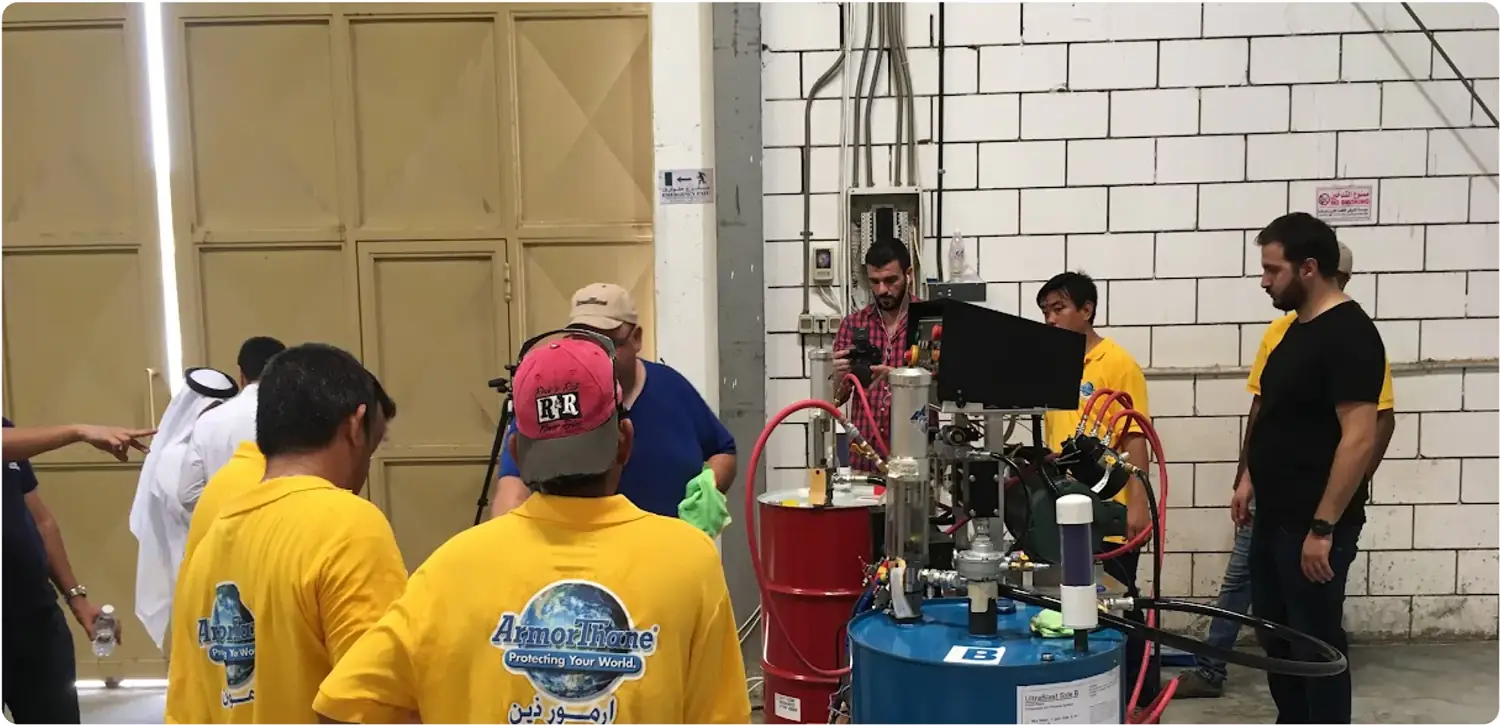
Equipment guide · Calculator
How much does spray-on bedliner equipment cost?
Published prices for low-pressure packages, high-pressure proportioners and full trailer rigs, plus the gear each one leaves out of the box.
Read the guide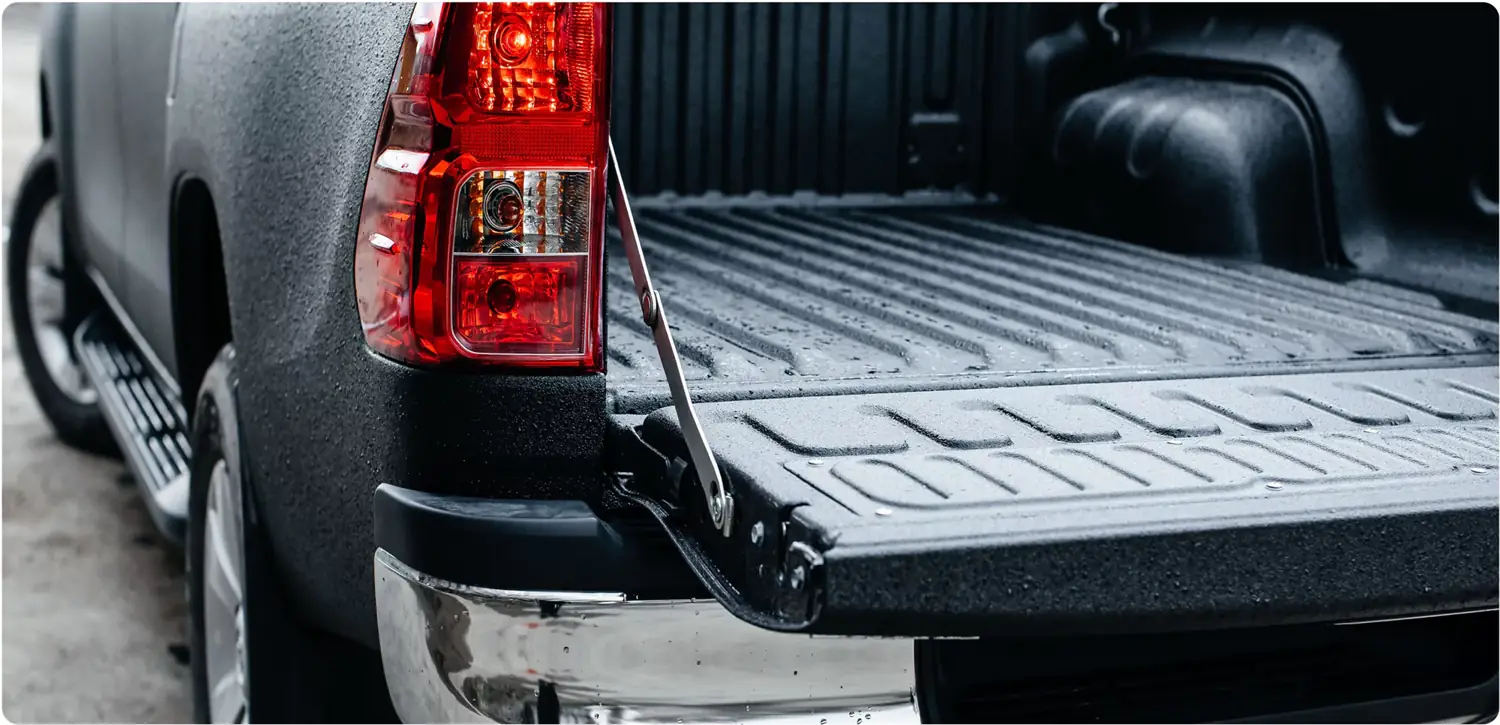
Business comparison · Calculator
Bedliner franchise vs. independent dealer: what each one costs
LINE-X sells franchises. Rhino Linings and ArmorThane sell equipment packages with no royalties. Here are the published numbers side by side, and what they leave out.
Read the guide